بسم الله الرحمن الرحيم
الحمد لله رب العالمين، والصلاة والسلام على رسولنا الكريم، وعلى آله وصحبه أجمعين، أما بعد
Keys To Fiqh | T.me/K2Fiqh | #K2UsulBenefits1
In this article I will mention five of the most important works in Usul authored by the Hanābilah. At the end, I will add a brief section highlighting some of the more notable abridgments in Hanbali Usul.
All Usul al-Fiqh issues within the Madhhab can be found in the following five books:

1. “al-‘Uddah العدة في أصول الفقه” by al-Qādhi Abu Ya’lā Muhammad b. al-Husayn al-Farrā (457h).
Altogether, al-Qādhi authored four books in Usul:
1. “al-Mujarrad”: it was authored in the early stages of his life but is currently unavailable to us.
2. “al-Kifāyah”: is also unavailable but its contents are quoted often by Abul Barakāt ibn Taymiyyah (the Grandfather of Shaykhul Islām) in “al-Musawwadah”. It contains issues of Usul al-Fiqh not mentioned in his other works.
3. “al-Riwāyatayn wal Wajhayn”: has a chapter at the end of the book related to Usul.
4. “Al-‘Uddah”: This is the most important book in Hanbali Usul. “al-‘Uddah” is regarded to be the first work to gather the Usul of the Hanābilah in an organized structured fashion. It is the primary source for all future Hanbali Usul books that came after.
al-Qādhi Abu Ya’lā’s unique style and fingerprint can be seen throughout “al-‘Uddah”. He wasn’t just a transmitter of statements, instead, al-Qādhi provided unique insight and deductions for everything he relayed. Not only did he convey multiple views traced back to Imam Ahmad on an issue, but he also analyzed each of them and provided his own conclusion of the most authentic. A wonderful aspect of this book is that the author teaches the reader how Imam Ahmad’s view is extracted from a narration that is attributed to him. He also mentions the student who relayed that particular view from the Imam. al-Qādhi Abu Ya’lā doesn’t only confine himself to the Usul of the Hanābilah, he also branches off to the positions found in the other Madhāhib accompanied with their reasoning for differences, detailed analysis, discussion, and inferences.
Among the various resources he used to compile “al-‘Uddah” were:
1. “al-Fusūl” by al-Jassās and
2. “al-Mu’tamad” by Abul Husayn al-Basree who were both Hanafi scholars.
This explains why there are much similarities between his works and the Ahnāf in Usul.
These are just a few distinguishing attributes of this monumental work. al-Qādhi’s footprint left an enormous impact that can be seen in all of the Hanbali Usul books that followed. Many of al-Qādhi’s students wrote in Usul but probably the most notable of them are:
A. “at-Tamheed التمهيد في أصول الفقه” by Abul Khattāb, Mahfūdh b. Ahmad, al-Kalwadhāni (510h).
B. “al-Wādih الواضح في أصول الفقه” by Abul Wafā Ali b. Aqeel (531h).
2. “at-Tamheed التمهيد في أصول الفقه” by Abul Khattāb, Mahfūdh b. Ahmad, al-Kalwadhāni (510h).

Abul Khattāb was among the outstanding students of al-Qādhi Abu Ya’lā b. al-Farrā, and he became one of the Imams of his time as well as Shaykh of the Hanābilah. (Siyar ‘Alām an-Nubalā: 19/348, Dhayl Tabaqāt al-Hanābilah: 1/271 onwards)
His book “at-Tamheed” is considered to be the second most important resource for the Hanābilah in Usūl after “al-‘Uddah”. The great scholar Abdullah at-Turki حفظه الله stated this work is most similar to “al-‘Uddah” by his Shaykh al-Qādi Abu Ya’lā. (al-Madhhab al-Hanbali: 2/121-122)
The style of Abul Khattāb in “at-Tamheed” is as follows:
He starts off by mentioning the Usuli issue, then follows up by providing his own, as well as the oppositions’, opinion on the issue. Afterwards, he cites the evidences for each view. Finally, Abul Khattāb debates each side and provides his conclusion. Although much of what Abul Khattāb relays can be found in “al-Uddah” by al-Qādi Abu Ya’lā, there are instances where he does differ with the view of his Shaykh.
It is a wonderful effort focused on evidence & reasoning. That being said, there are some occasions where he discusses issues and their rebuttals at extreme length thus making the book an extensive read. Thankfully there is a summarized version in one volume by Sulaymān b. Abdur-Rahmān b. Hamdān (1397h) wherein he provides the essence of “at-Tamheed”.
3. “al-Wādih الواضح في أصول الفقه” by Abul Wafā Ali b. Aqeel (531h).

This is another student of al-Qādhi Abu Ya’lā who was also heavily influenced by “al-‘Uddah”.
Ibn Aqeel is a well known respected scholar in Islam. Ibn Rajab said, “He spoke often with the tongue of independent reasoning (ijtihād) and personal conclusions (tarjīh), following the evidence that was apparent to him. He would say: ‘The obligation is to follow evidence, not Ahmad’s (view).’” (Dhayl Tabaqāt al-Hanābilah: 1/152)
This book was heavily praised by many scholars, especially by Abul Barakāt ibn Taymiyyah in “al-Musawwadah”. Not only does Ibn Aqeel provide logical authoritative defense against proponents of innovation and their foundations, but he also supplies much needed clarity of numerous ambiguous issues. Ibn Aqeel provides additional benefit to his work by including issues not discussed in “al-‘Uddah” and “at-Tamheed”.
“al-Wādih” can be categorized into three parts:
A. Issues related to definitions and Usul al-Fiqh
B. Issues related to debating
C. Issues related to conflicting views held by the different schools of thought
Although both “al-‘Uddah” and “at-Tamheed” relied heavily on “al-Fusūl” and “al-Mu’tamad”, two Hanafi works, Ibn Aqeel utilized books by the Shāfi’ee scholars (thus highlighting another difference in style).
4. “al-Musawwadah المسودة في أصول الفقه” by the family of Taymiyyah:
A. Abul Barakāt Abdus-Salām b. Taymiyyah (652h), “The Grandfather”.
B. Abul Mahāsin Abdul-Halīm b. Abdus-Salām (682h), “The Father”.
C. (Shaykhul Islām) Abul Abbās Ahmad b. Abdul-Halīm b. Abdus-Salām (728h), “The Grandson”.

This is a set of issues written on Usul al-Fiqh topics. It was initially started by Abul Barakāt, then additional commentary was provided by his son Abul Mahāsin Abdul-Halīm, and finally completed by his grandson who we know as: “Shaykhul Islām ibn Taymiyyah”. Ibn Rajab mentioned that these writings were gathered, organized and compiled by Ahmad b. Muhammad al-Harrāni (745h), student of Shaykhul Islām Ibn Taymiyyah and a scholar in his own right (he was the Shaykh of Imam adh-Dhahabi).
“al-Musawwadah” is similar to the previously mentioned books from the aspect of relaying, debating, and providing independent conclusions. It combines all of the three previously mentioned books – and others – with commentary. At the same time, it differs from previous works as it: provides scrutiny and affirmation of Usuli principles with its evidences, along with many practical applications of those principles to Fiqh issues. “al-Musawwadah” is a wonderful combination between the two Usuli methods known as the “Shafi’iyyah” and “Ahnāf” schools. Additionally, it does not contain Usuli rules derived from “fabricated ahadith”, which greatly differs with other works.
5. Usul al-Fiqh by Ibn Muflih or “Usul ibn Muflih أصول ابن مفلح”.

Yusuf b. Abdul-Hādee related (in Dhayl adh-Dhayl) that ibn Muflih was called the “sweeper” as he would gather everything in the Madhhab into one place, similar to a broom. This is seen in three of his most notable books: “Usul ibn Muflih” for Usul, “al-Furoo’” in Fiqh, and “al-Adāb ash-Shar’iyyah” in manners and etiquette. To show the importance of his works, al-Mardāwi used “Usul ibn Muflih” as the basis for his own Usul book “at-Tahbeer” and he used “al-Furoo’” as the foundation for his monumental work “al-Insāf”.
This scholar and student of Ibn Taymiyyah decided to compile the 4 previously mentioned Usul books all into one, along with additional issues in other Hanbali Usuli books. “Usul ibn Muflih” became the foundational text for everyone who came after him. There was no longer a need to find and gather the statements of the Hanābilah as ibn Muflih was granted success to compile most of these statements in one place. Consequently, after Ibn Muflih, there have only been efforts to either summarize or explain existing works. May Allah accept this service and reward him with good.
Other Notable Summarized Usul al-Fiqh Books Authored by the Hanābilah:
1. “Rawdatun-Nādhir روضة الناظر وجنة المناظر” by Muwaffaq-Deen Abdullah b. Ahmad ibn Qudāmah (620h). Which is a summarized Hanbali version of “al-Mustasfā” by al-Ghazzāli.
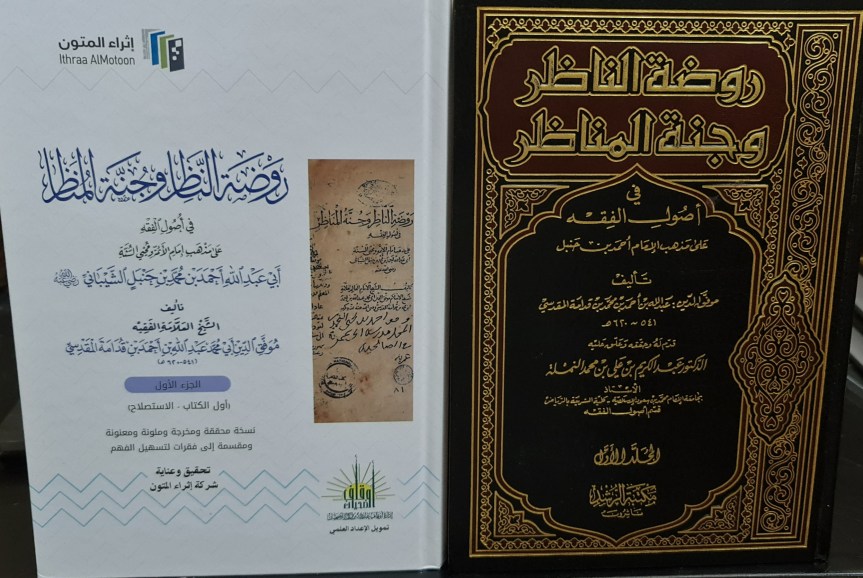
2. “al-Bulbul البلبل في أصول الفقه” by Najm-Deen Abul Rabī Sulaymān b. Abdul-Qawee at-Tūfī (716h). This is a summarized version of “Rawdatun-Nādhir” and uses the wording in Ibn Hājib’s summarized Usul al-Fiqh book.

3. “Qawā’id al-Usūl قواعد الأصول ومعاقد الفصول” by Safi-Deen Abdul-Mu’min b. Abdul-Haqq al-Qatī’ee al-Baghdādi (739h). This is a summarized version of تحقيق الأمل في علمي الأصول والجدل.

4. “at-Tahreer تحرير المنقول وتهذيب الأصول” by ‘Alā-Deen Abul Hasan Ali b. Sulaymān al-Mardāwi (885h). This is a summarized version of “Mukhtasar ibn al-Lahhām” by Abul Hasan Ali b. Muhammad al-Ba’li, more famously known as “ibn al-Lahhām” (803h). It was a summary of Ibn Muflih’s Usul with additions from Mukhtasar Ibn Hājib, Jam’ al-Jawāmi’, and Mukhtasar at-Tūfī. al-Mardāwi edited and rearranged “Mukhtasar ibn Lahhām” and called it “at-Tahreer”.
5. Muhammad b. Ahmad ibn an-Najjār al-Futūhi (972h) summarized “at-Tahreer” and called it: “Mukhtasar at-Tahreer”.
Here are two explanations of “Mukhtasar at-Tahreer”:
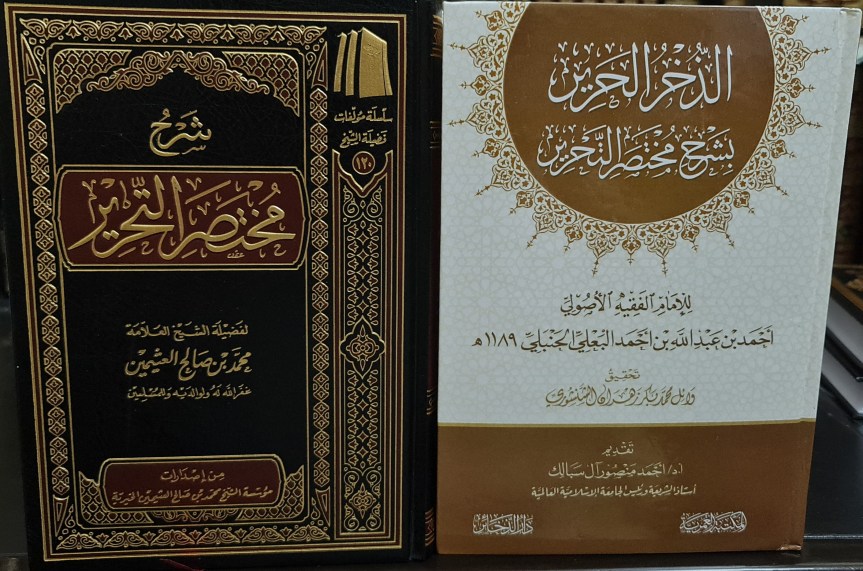
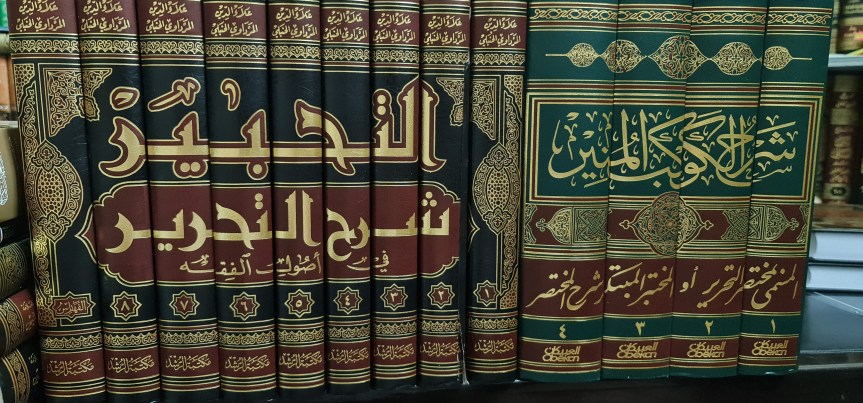
6. After compiling “at-Tahreer” and seeing the people’s desire to learn and study it, al-Mardāwi decided to accompany the text with an explanation. He called it: “at-Tahbeer التحبير في شرح التحرير”. In “Tahbeer” al-Mardāwi used “Usul ibn Muflih” and other works to explain “al-Tahreer”.
7. Ibn an-Najjār also summarized al-Mardāwi’s explanation “at-Tahbeer” and called that: “Sharh al-Kawkab al-Muneer”.
This is just an abridgment of some notable Usul books authored by the Hanābilah. I will write in detail about these works and more in future posts إن شاء الله. May Allah have mercy on them all.
#K2UsulBenefits #K2Fiqh #KeysToFiqh
والله تعالى أعلم، هذا وصلى الله وسلم على نبينا محمد وعلى آله وصحبه أجمعين
✍️ Abu Awzaa’ee Abdus-Salaam al-Makki al-Hanbali
🕋 Makkah al-Mukarramah حرسها الله
🗓 7th of Rabee’ al-Awwal, 1442 (12/24/20CE)
👋 Join us for more benefits: T.me/K2Fiqh
Categories: #UsulNotes, Benefits
 Keys To Fiqh