The Fiqh Curriculum of Ibn Qudāmah رحمه الله with its Explanations
Keys To Fiqh | T.me/K2Fiqh | #K2FiqhNotes7
In #K2KFiqhNotes5, I mentioned three suggested modules one can study and follow in order to progress within the Hanbali Madhhab. In this post, I would like to highlight another remarkable curriculum: the works of the Mujtahid Ibn Qudāmah al-Maqdisi (d. 620h), may Allah have mercy on him.
Before expounding on his Fiqh books, let’s take a moment to learn the basics about this great scholar.
His full name was: Abu Muhammad Abdullah b. Ahmad b. Muhammad b. Qudāmah b. Miqdād b. Nasr al-Maqdisi al-Jammā’īli al-Damashqi as-Sālihi al-Hanbali. Ibn Qudāmah was given the titles of: Shaykhul Islaam and Muwaffaqud-Deen. He was born in Palestine (541h) and died in Damascus (620h). It is well known that his family was loaded with major scholars of the Deen, including his first teacher: his father Abul Abbās. May Allah have mercy on them all.
Ibn Taymiyyah رحمه الله famously said about Ibn Qudāmah:
ما دخل الشام بعد الأوزاعي أفقه من الشيخ الموفق
“There is no one who entered Shām, after al-Awzā’ee (157h), more knowledgable in Fiqh than the scholar al-Muwaffaq.”
Shaykhul Islam Ibn Taymiyyah’s statement provides all the insight you need to know about the level of this major Alim’s scholarship. al-Muwaffaq deserves an entire book about his life. However for the sake of brevity, we will suffice with this. Now, let’s move on to his Fiqh curriculum.
Ibn Qudāmah meticulously authored 4 books in succession with the intent of transforming the inexperienced novice into an independent specialist in Fiqh.
As-Sarsary رحمه الله noted these works in the following lines:
كَفَى الْخَلْقَ بِ(الْكَافِي) وَأَقْنَعَ طَالِبًا … لِ(مُقْنِعِ) فِقْهٍ عَنْ كِتَابٍ مُطَوَّلِ
وَأَغْنى بِ(مُغْنِي الْفِقْهِ) مَنْ كَانَ بَاحِثًا … وَ(عُمْدَتُهُ) مَنْ يَعْتَمِدْهَا يُحَصِّلِ
“The people are sufficed with ‘al-Kaafi’ and students are satisfied/content with the fiqh (found in) ‘al-Muqni’ over the lengthier books.
The researchers are enriched with the Fiqh in ‘al-Mughnee’, and whoever makes his ‘Umdah’ as the foundation acquires (knowledge).”
Let’s take closer look at each work beginning with:
1. Umdatul Fiqh عُمْدَةُ الْفِقْه
Fiqh is similar to being in the middle of an ocean without any shore or signposts in sight. If a person isn’t familiar with navigating the seas, he will certainly become lost. For that reason, Ibn Qudāmah authored this work as a basic compass to steer the beginner in the right direction. In this manual, he only mentions 1 view which is considered to be the “relied” (مُعْتَمَد) of the Hanbali Madhhab.
In this primer, al-Muwaffaq mentions relatively few issues – not going into tremendous detail – along with evidences sprinkled throughout. The goal of this compilation is to familiarize you with the style of the Fuqaha and the basic issues in Fiqh. Once you have develop your sea legs, you’ll find more masā’il and views in the next level.
The contents within this book along with “al-Muharrar” المُحَرّر by Majd-Deen Abul Barakāt Abdus-Salām (grandfather of Ibn Taymiyyah) are considered to be the relied opinions among the Hanbali scholars within the period of 403h-884h. If there are discrepancies between the two, Ibn Qudāmah’s work is given preference.
- Explanations/Resources:
Several scholars of the past and present have written explanations for this book due to its importance. I will only highlight the most beneficial and significant based on my experiences:
A. al-Uddah العُدَّة في شرح العمدة by Bahā ad-Din Abu Muhammad Abdur-Rahman b. Ibrahim al-Maqdisi (624h) رحمه الله. This is the first ever explanation of al-Umdah. Bahā ad-Din was one of the longest tenured students of Ibn Qudāmah and truly understood the intent of al-Umdah. That’s what makes this explanation foundational. It is the main explanation we study here in KSA. Any other additional benefit/commentary is added to the margins of this book.
The most distinguishing features of this explanation:
It is (1) succinct and clear at the same time, (2) compact yet still comprehensive in expounding on the rulings, (3) filled with evidences (textual & intellect-based) along with its reasoning.
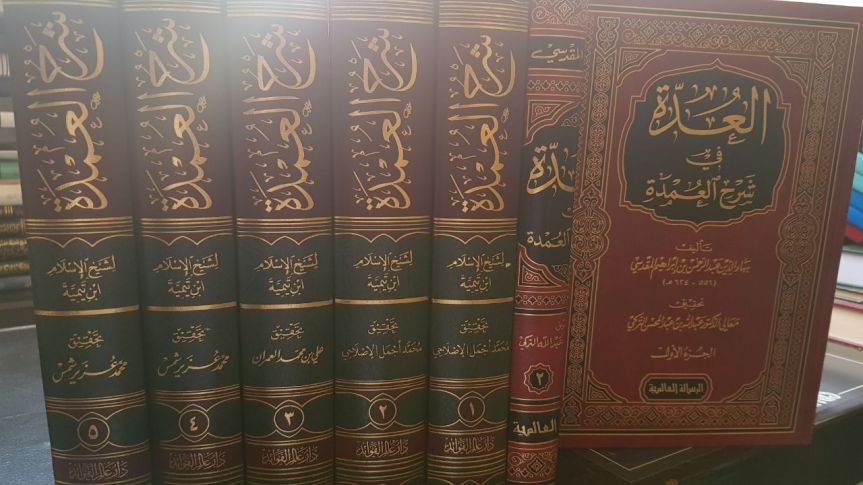
B. Sharh al-Umdah شرح العمدة by Shaykhul Islam Ibn Taymiyyah (728h) رحمه الله. This is one of Ibn Taymiyyah’s earlier works authored in his late 20s-early 30s. Shaykhul Islam’s grandfather (Abdus-Salam) and father (Abdul-Halim) were both major scholars in the Hanbali Madhhab and following in their footsteps, Ibn Taymiyyah became one as well. This explanation substantiates his thorough knowledge of the Hanbali Madhhab. Later on in his life, Ibn Taymiyyah became a Mujtahid Mutlaq as mentioned by adh-Dhahabi:
وبقي عدة سنين يفتي باجتهاده ولا يتقيد بمذهب
“He continued for a number of years offering rulings based on his own independent reasoning; he was not bound by any school of thought.”
Although there is a stark difference between his earlier and later works, those latter selections by Shaykhul Islam are still considered to be either minority views within Hanbali Madhhab or issues produced based on the foundations of the Hanbali Madhhab. Consequently, his independent rulings remain part of the Madhhab. I will expound on this in a future post, إن شاء الله.
At any rate, this is a wonderful book with many intricate details (ex: take a look on his discussion on “fasting on the day of doubt”). Unfortunately, what is available to us today is not a full written explanation of the text; it only covers some of the chapters in Fiqh al-Ibadāt (Tahārah, some of Salah, Siyām, and Hajj). It is said that he also had an explanation of al-Muharrar where he explained chapters related to Transactions, Marriage, and etiquette of the Qādi – but this book is assumed to be lost والله أعلم.
C. Sharh Umdah al-Fiqh شرح عمدة الفقه by Sh. Abdullah b. Abdul-Aziz al-Jibrin coupled with the 7 volume set of exercises prepared by Sh. Āmir Bahjat and his team entitled حقيبة التمرينات على عمدة الفقه.
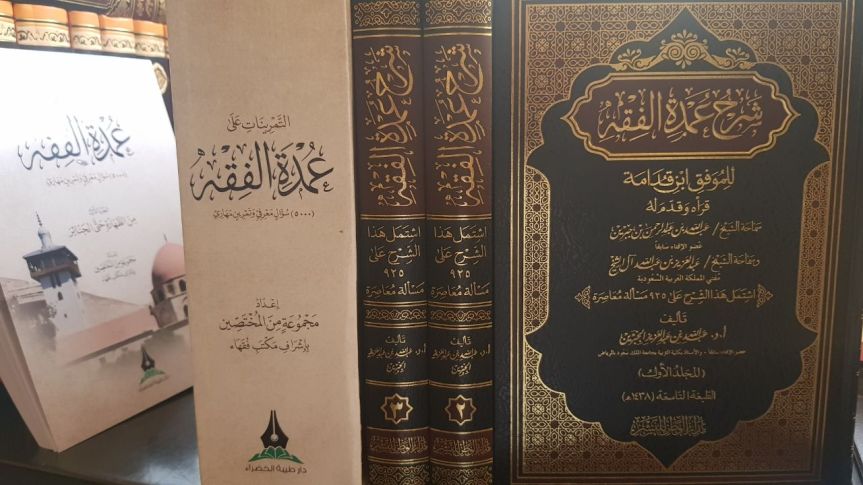
Distinguishing features of Sh. al-Jibrin’s explanation:
He (1) clarifies the intent of the author, (2) links statements back to their sources, (3) provides ahadith grading, (4) mentions where there is consensus إِجْمَاع on an issue (this builds one’s fiqh capability and it is one of the conditions needed to reach Ijtihād), (5) references the narrations of the Sahabah (May Allah be pleased with them), (6) addresses contemporary issues, and much more. If one had to pinpoint any issues with this explanation, then perhaps one could say that the Shaykh sometimes diverts from the selected rulings of Ibn Qudāmah and provides his own preferred opinion.
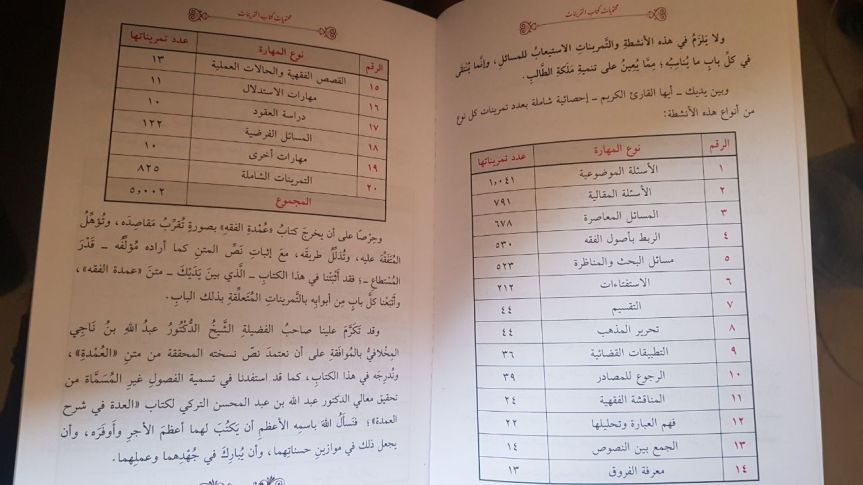
As for the exercise book, it is a wonderful supplement to the explanation. It provides practical examples that assists in testing your understanding of the material. It also develops other Fiqh skills as seen below:
After completing Umdatul Fiqh – by memorizing and understanding its masā’il – you’ll continue onto the next level:
2. al-Muqni’ المُقْنِع
In the first stage, you learned the relied position on a selected few issues. The next book, al-Muqni’, is a bridge that allows the beginner to reach the intermediate level in Hanbali Fiqh. Ibn Qudāmah increases the amount of masā’il and adds a second opinion in the Madhhab for each issue. He does not mention any evidences nor reasonings. The goal of this phase is to develop the ability of distinguishing between two views and nurture the student in leaning towards the more correct opinion.
This is another work of Ibn Qudāmah that has been given considerable attention by Hanbali scholars. There are:
– Summaries of this book (i.e. Zād al-Mustaqni’ زَادُ الْمُسْتَقْنِع by Sharaf ad-Dīn Abul Najā Musa al-Hajjāwi [d. 968h])
– Poems of it (i.e. عِقْد الفَرَائِد وَكَنْز الفَوَائِد by Muhammad b. Abdul-Qawee b. Badrān al-Maqdisi [d. 699h] with additions from al-Kāfi, al-Muharrar exp. of al-Muqni’, and al-Mughni)
– Dictionaries based on its terminology (i.e. al-Mutli’ المُطْلِع عَلَى أَلْفَأظ الْمُقْنِع by Shams ad-Dīn Muhammad b. Abul Fath al-Ba’li [d. 709h]) and
– Numerous explanations. I will suffice with mentioning only three:
- Explanations:
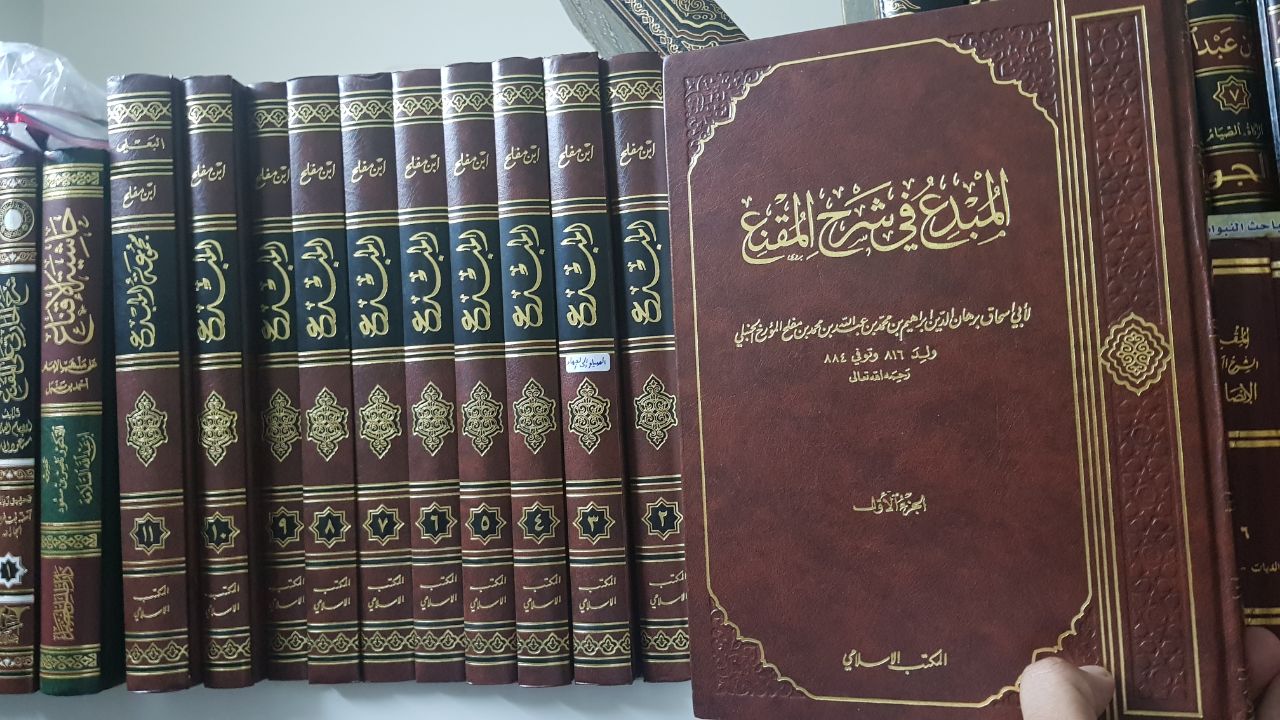
A. al-Mubdi’ المُبْدِع شرح المقنع by Burhān ad-Din Ibrahim b. Muhammad b. Muflih (884h) رحمه الله.
This is one of, if not, the most beneficial explanations of al-Muqni’. Ibn Muflih focused on mentioning the: (1) evidences for the Fiqh issues along with (2) summarized gradings for the aHadith, (3) statements of the Companions رضي الله عنهم, the Tabi’un and (4) those who followed among the Fuqaha (specifically from the Hanābilah from the time of Imam Ahmad to Ibn Taymiyyah), (5) the different statements of Imam Ahmad on those particular issues – all with precise scrutiny and investigation.
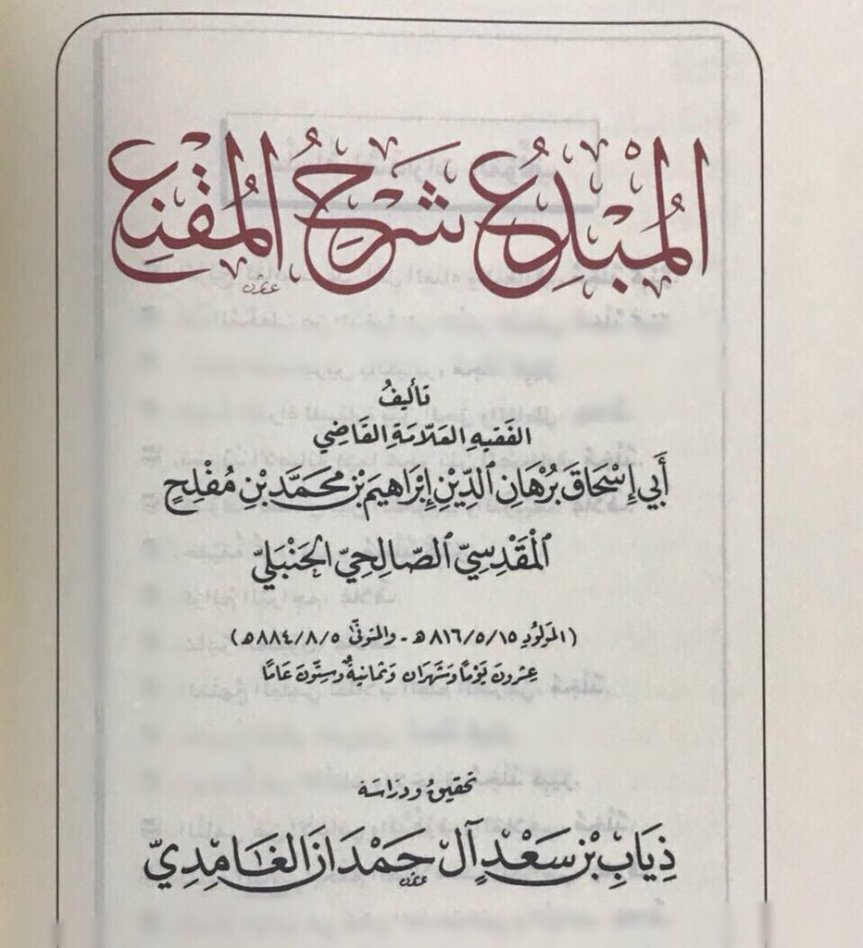
(The above version has not been published yet. The below version has been published. It is presented to us in book form via the efforts of Shaykh Shu’ayb al-Arna’ut, Abdul-Qadir al-Arna’ut, and others with thorough editing, checking, and referencing جزاهم الله خيرا.)
B. ash-Sharh al-Kabeer الشَّرْحُ الكَبِيْر by Shams-Deen Abul Faraj Abdur-Rahman b. Qudāmah (682h) رحمه الله who was al-Muwaffaq Ibn Qudāmah’s cousin.
This explanation is essentially a summary of al-Mughni with extension of a few benefits. The advantage of this work is that it allows you to 1. instantly know the differences in the other Madhāhib الخلاف العالي and 2. quickly review the issues in al-Mughni in a more organized fashion.
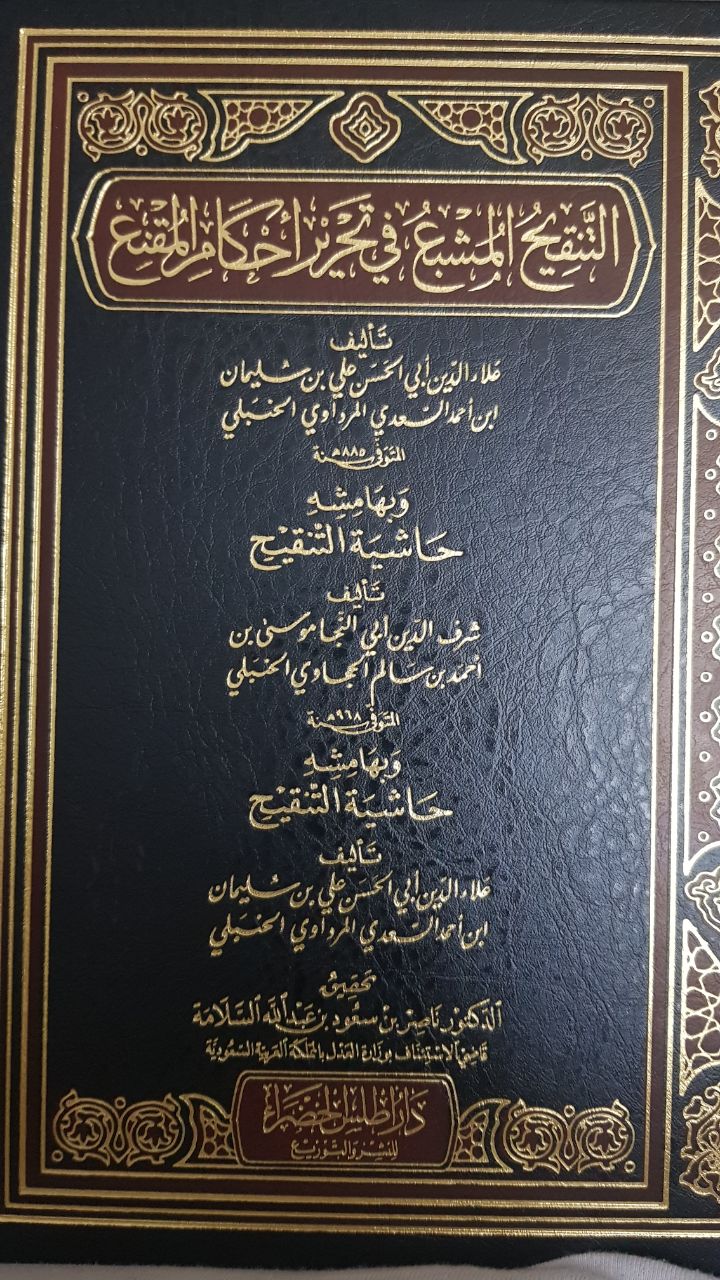
C. al-Insāf الإِنْصَاف فِي مَعْرِفَةُ الرَّاجِح مِنَ الْخِلَاف by the Mujaddid of the Madhhab, ِAla-Deen Abul Hasan al-Mardāwi (885h) رحمه الله.
This magnificent book (1) takes each issue mentioned in al-Muqni’ and relays all of the views within the Madhhab الخلاف النازل. It (2) also indicates the selected view by the majority, (3) highlights the مفردات, and much more. This book truly deserves a post on its own (إن شاء الله in the future).
al-Mardāwi also has another book entitled التَنْقِيْح المُشْبِع في تَحْرِيْرِ أَحْكَامِ المُقْنِع which is essentially a summary of the issues he corrected and selected in al-Insāf.
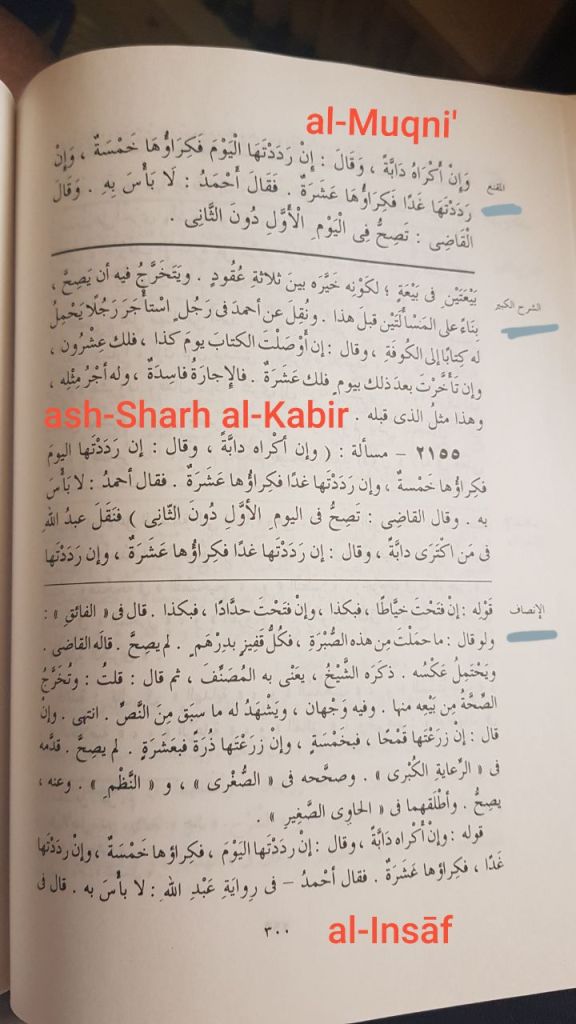
Our beloved Shaykh, Dr. Sami as-Suqayr حفظه الله mentioned that it was suggested to print al-Muqni’ along with ash-Sharh al-Kabeer and al-Insāf all in one compilation.
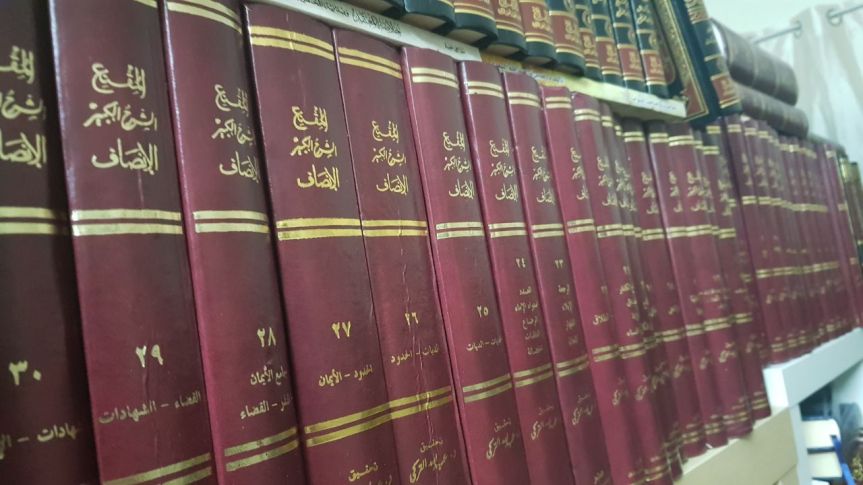
If the student wanted to know the differences outside of the Madhhab on an issue, they would look to ash-Sharh al-Kabeer, and if he wanted to know the differences within the Madhhab on that issue, he would read al-Insāf – all on the same page. So, ibn al-Uthaymeen asked Sh. Sami to provide an example of how it should be done. Sh. Sami produced about 10-20 pages and submitted the rough draft to ibn al-Uthaymeen who then presented it to Sh. Abdullah at-Turki (the original Muhaqqiq/editor of the texts). It was then printed as seen below:
3. al-Kāfi الكَافِي
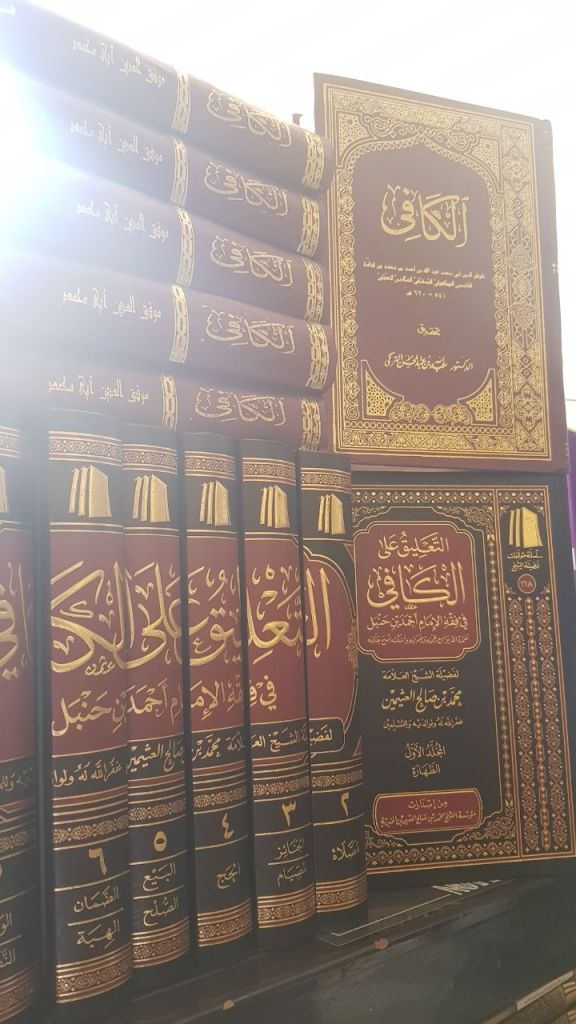
This stage is considered as the intermediate level for Hanbali Fiqh. In it, Ibn Qudāmah mentions all of the differences held within the Madhhab الخلاف النازل along with their evidences and reasonings. He trains the student how to extract rulings from the texts and develops the skill of judging between the evidences. The goal is to nurture the student into becoming a Mujtahid only within the Madhhab.
- Explanations:
A. Sh. Ibn al-Uthaymeen رحمه الله (audio). This explanation was taught during the years 1412-1421h in his masjid in Unayzah. I have linked the audio explanation. There is also a printed version by his charity organization in 8 volumes (in the picture below). It was reviewed by two of his closest students: Sh. Khalid al-Mushayqih and his son-in-law Sh. Khalid al-Muslih حفظهما الله.
This explanation displays the Shaykh’s expertise of the Madhhab.
B. Sh. Sami as-Suqayr حفظه الله (audio). He is a famous scholar in Saudi Arabia and was one of the closest students of Ibn al-Uthaymeen رحمه الله.
C. Sh. Abdur-Rahman al-‘Ajlān حفظه الله (audio). He is a famous scholar and teacher in Masjid Haram (Makkah).
4. al-Mughni المُغْنِي
This is an explanation to Mukhtasar al-Khiraqī مُخْتَصَر الْخِرَقِي, the first ever Hanbali Fiqh manual. It was compiled by Abul Qāsim Umar al-Khiraqī (334h, the first Hanbali to have been buried in Damascus). ‘Izz ad-Dīn al-Masri said that there are 300 explanations for this text with al-Mughni being one of the most famous ones. al-Khiraqi’s work contains 2,300 issues.
al-Muwaffaq memorized this book early on and studied it throughly. After leaving Baghdad and reaching Damascus, he began authoring an explanation to the Mukhtasar and called it “al-Mughni”.
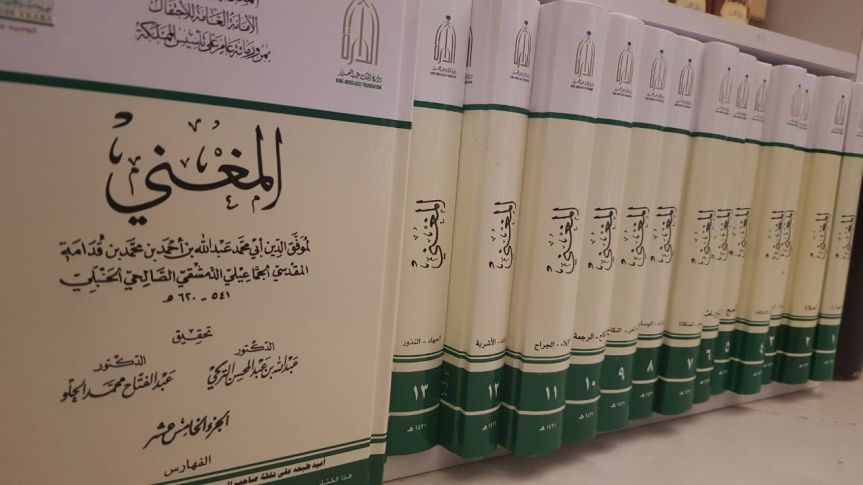
Ibn Qudāmah takes the issues mentioned by al-Khiraqī and places them as a title heading. He then begins to explain these masā’il by expounding on every related detail. Then, he branches off and adds issues not mentioned by al-Khiraqi but still connected to the topic. For every issue, he provides the views of each Madhhab, their evidences and reasoning, and his rebuttals with conclusion(s). His book is also relied on to know the consensus opinions إجماع on issues.
This magnificent title is one of the primary resources referenced and utilized by scholars. The ultimate goal of this work is to destroy any semblance of Taqleed and acclimate the budding scholar to the meadows of investigation and scrutiny. The end result of mastering this work (along with other conditions) is the birth of a Mujtahid Mutlaq (Unrestricted or Absolute Jurist).
This is what I have to present related to the Fiqh Curriculum of Ibn Qudāmah al-Maqdisi. I ask Allah to forgive him and all of the scholars mentioned above for their sins, enter them into the highest abode in Paradise without punishment nor reckoning, accept this effort from myself, and place barakah therein. Wallahu Alam.
#K2FiqhBenefits #K2FiqhNotes #K2Fiqh #KeysToFiqh
✍️ Abu Awzaa’ee Abdus-Salaam al-Makki al-Hanbali
🕋 Makkah al-Mukarramah حرسها الله
🗓 16th of Dhul-Qi’dah, 1441 (7/7/2020 CE)
👋 Join us for more benefits: T.me/K2Fiqh

Categories: #FiqhNotes, Benefits

