بسم الله الرحمن الرحيم
The Importance of Learning Islamic Manners along with Fiqh (The Hanbali & Manners)
Keys To Fiqh | T.me/K2Fiqh | #K2FiqhNotes8
Prophet Muhammad, The Exemplary Role Model
For the Muslim, knowledge and manners are two inseparable entities. The perfect example was the Messenger of Allah صلى الله عليه وسلم as he was the most knowledgable of the Quran and it reflected through his actions. Aisha رضي الله عنها, the wife of the Prophet and someone who witnessed all of his daily habits, said: “Certainly, the character of the Prophet of Allah was the Quran.” (Muslim)
Allah, the All-Knowing, informed us:
وَإِنَّكَ لَعَلَىٰ خُلُقٍ عَظِيمٍ
“And you (O Muhammad) are truly a man of outstanding character.” (68:4)
The Prophet صلى الله عليه وسلم stated himself, “I have been sent to perfect good character” (al-Muwatta).
True beneficial knowledge only produces exceptional character. There is an unbreakable connection between the two, and the scholars of Islam understood that completely. Scholars have exerted their efforts in compiling works that focused on building the proper Muslim identity and persona based on Islamic teachings. There have been numerous books authored and/or compiled about the character of the Prophet صلى الله عليه وسلم. Perhaps the best among them (after the Speech of Allah of course) is the work entitled “al-Adab al-Mufrad” by Imam al-Bukhari (256h) رحمه الله. It comprises of only 1322 aHadith and it is one of the primary sources for anyone who desires to learn about the manners and etiquette of the Prophet صلى الله عليه وسلم.
Scholars have authored books and composed poems, either directly or indirectly, explaining the contents within al-Adab al-Mufrad and other Hadith works. In this post, I will only highlight a few compilations authored by the Hanābilah that the Muslim, and the Hanbali Disciple in particular, should know, study, and implement into their lives.
Importance of Islamic Manners
As a student begins to learn the basics of knowledge, Shaytān – mankind’s sworn enemy – ramps up his efforts in trying to misguide and deceive him/her. Among Shaytān’s traps is to plant the seeds of pride, arrogance, self-amazement, envy and many other diseases within the student’s heart. If the student does not remedy these illnesses immediately, it will only expand and lead to his/her destruction – as the severity of punishment for the knowledgable one is worse than others. The ultimate goal of Shaytān is to use these sicknesses as a weapon against the student in order to influence him/her into committing sins and crimes against themselves and humanity.
The Fuqahā, the scholars of understanding and insight, recognized this major trap set by Iblees and understood the dire need of addressing etiquette especially for one who has studied, memorized and obtained understanding of the Sharee’ah. Some of the Fuqahā added an additional chapter at the end of their Fiqh works related to Islamic Adab (etiquette and behavior). This can be seen at the end of Hadith compilations focused on Islamic Fiqh rulings like “Bulūgh al-Marām” and “al-Muharrar Fil-Hadith” by Ibn Hajar and Ibn ‘Abdul-Hādī respectively. Examples can also be found within Fiqh manuals itself; among the Ahnāf this topic is addressed under the title of الحظر والإباحة, with the Mālikiyyah it is under the title of الجامع, and with the Shāfi’iyyah it is scattered in different places like السير وفروض الكفايات وباب الأطعمة بعد الضحايا and other chapters.
The Hanābilah also gave great importance to this subject. In fact, as mentioned by Sh. Abdus-Salām ash-Shuway’ir حفظه الله, none have come close to match their efforts except for perhaps the Mālikiyyah. Some Hanbali scholars have dedicated an entire chapter related to manners in the beginning or the end of their Fiqh manuals. Works by Abdul-Qādir’s “al-Ghunyah”, Ibn ‘Aqīl’s “al-Fusūl”, al-Jarrā’i’s “Ghāyatul-Matlab”, Ibn Balbān’s “Mukhtasar al-Ifādāt”, are just a few examples. The Hanābilah also authored separate independent works on Islamic Etiquette like Ibn al-Qayyim’s “Zād al-Ma’ād”, Ibn Muflih’s trilogy on Islamic Etiquette, al-Hajjāwi and as-Saffārīnī’s explanations to “al-Mandhūmah” and others that we will highlight in this post إن شاء الله.
Ibn Abdul-Qawī’s Poems
The first of text I would like to present are the poems composed by Abu Abdullah Muhammad b. Abdul-Qawī b. Badrān al-Maqdisi al-Mardāwi (699h), the teacher of the great Shaykhul Islam Ibn Taymiyyah (in Arabic sciences), and its explanations.
Ibn Abdul-Qawī was known for his skill of composing poems and he was referred to as النَّاظِم. Two of his poems that achieved great notoriety were:
1. عِقْد الفَرَائِد وَكَنْز الفَوَائِد: This is a poem based the contents of Ibn Qudāmah’s Fiqh manual: al-Muqni’ along with additions from al-Kāfi, al-Muharrar explanation of al-Muqni’, and al-Mughni.
2. مَنْظُوْمَة الآدَاب: After completing the above poem in Fiqh, ibn Abdul-Qawī attached this poem in Islamic etiquette as reminder of the required manners that must be adorned by the Faqīh.
Sh. Abdul-Qādir b. Badrān (1346h) stated in “al-Madkhal” that Ibn Abdul-Qawī produced two poems: a concise version “as-Sughrā الصغرى or منظومة الآداب” which was explained by al-Hajjāwi, and “al-Alfiyyah al-Kubrā الألفية الكبرى” which was explained by al-Mardāwi and as-Saffārīnī. However, Sh. Abdus-Salām Shuway’ir disputed that claim and stated that the two are not separate works. Instead, “as-Sughrā” (185 lines or so) is an appendix for the 1,000 line version. He argued that both versions are considered as one poem for the following reasons: (1) ibn Abdul-Qawī did not place a separate title for “as-Sughrā”, (2) both versions are on the same poetic scale and end with the same letter (دال dāl aka دالية Dāliyyah), (3) al-Hajjāwi and as-Saffārīnī mentioned in their explanations that “as-Sughrā” was an appendix of “al-Kubrā”. (4) In the concise version, ibn Abdul-Qawī mentions that it is an appendix to the larger version when he said:
سِوَى مَا قَدْ اسْتَثْنَيْتُهُ فِي الذِي ابْتُدِي
Both the original and concise versions are referred to as مَنْظُوْمَة آدَاب العَالِم وَالمُتَعَلِّم as a whole (mentioned by Bakr AbuZayd).
Explanations for “as-Sughrā” (the concise version)
For the as-Sughrā الصغرى version, there are a few notably referenced explanations:
1. al-Qādi ‘Alā ad-Dīn Abul Hasan Ali b. Sulaymān al-Mardāwi (885h).
Many scholars have stated that there is no trace of its existence and Allah knows best (kindly correct me if you have found a copy).
2. Sharaf-Deen Abu-Najā Musā b. Ahmad b. Musa al-Hajjāwi al-Maqdisi as-Sālihī al-Hanbali’s (968h) explanation entitled: فَتْح الوَهَّاب شَرْح الآدَاب or more famously known as شَرْح مَنْظُوْمَة الآدَاب.
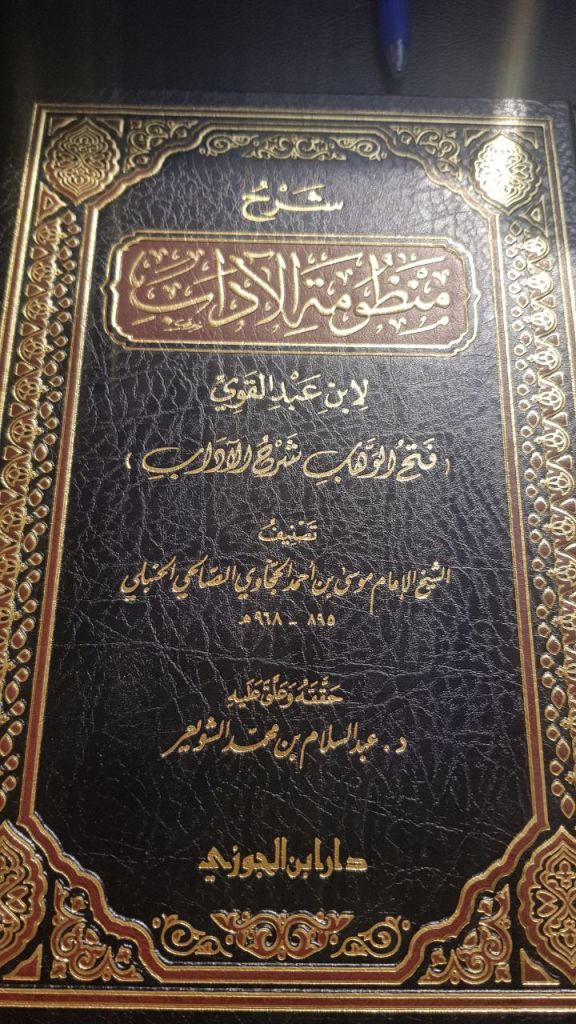
Due to the title of this book being شَرْح مَنْظُوْمَة الآدَاب, there was a bit of confusion as to which poem on Islamic Adāb was intended (some said it is an explanation to Ibn Muflih’s work, while others said al-Hajjāwi’s, and a third opinion states al-Mardāwi’s work). Shaykh Abdus-Salām ash-Shuway’ir mentioned that the correct opinion: it is an explanation for Ibn Abdul-Qawi’s poem.
Shaykh Abdus-Salām ash-Shuway’ir provided an outstanding service to the Ummah by making this explanation available to the masses. His checking and editing of the original manuscripts and referencing of each Hadith and statements of the scholars increases this book in its beauty. Rest assured that when you pick up this book, you’re reading the exact words of al-Hajjāwi رحمه الله. Due to the Shaykh’s humility and respect he has for al-Hajjāwi, he decided to not provide any additional commentary in the footnotes except that which would clarify the intent of the author.
al-Hajjāwi ends the book with sincere comprehensive advice about having Taqwa, devoting oneself to performing acts of obedience, having sincerity in all situations and cleansing the heart. He advises to avoid all disgraceful attributes/actions in the Deen, intellectually, and even in one’s customs. He also provides advice on how to behave in gatherings of knowledge and to keep an extremely close circle that is only filled with righteous intellectuals.
3. Muhammad b. Ahmad b. Sālim as-Saffārīnī’s (1188h) explanation entitled: غِذَاءُ الأَلْبَاب شَرْح مَنْظُوْمة الآدَاب.
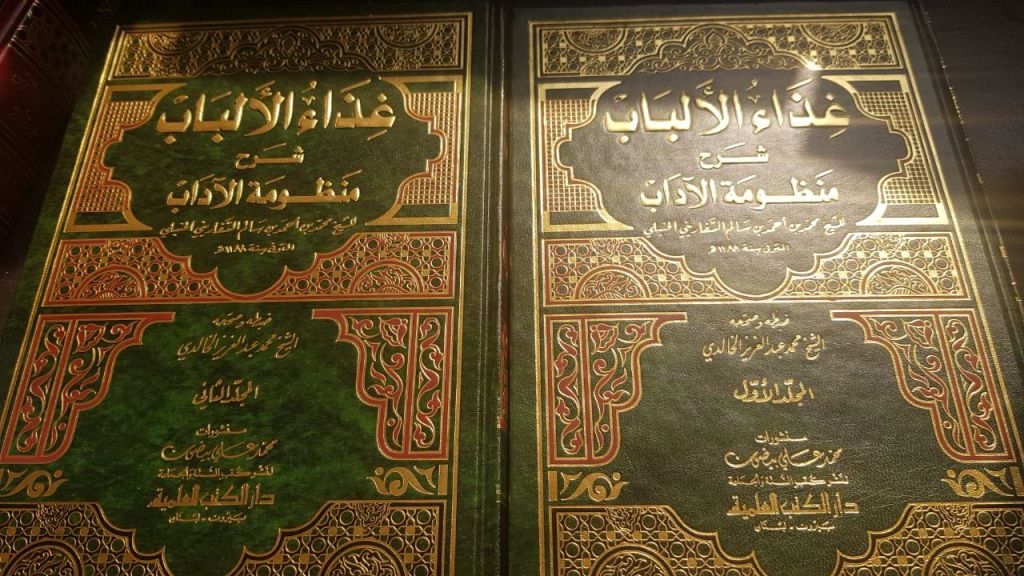
This 2 volume version is my personal copy which I only bought out of necessity. In this print there is no reference for the Ahadith nor for the scholarly statements provided in the footnotes. This makes it difficult to review the exact wordings and context of the quoted speech (but hey, something is better than nothing right?)
There is a much better copy in 6 volumes that was checked and edited by a group of researchers who worked on it in order to obtain their PhD degrees. It was published a few years ago but sold out quickly:
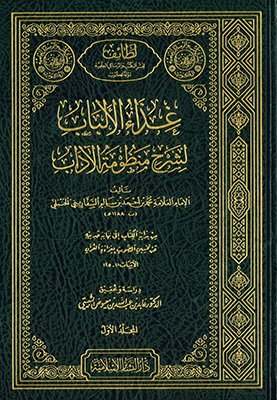
(If anyone is selling a copy, kindly contact me)
At first, as-Saffārīni was hesitant to author an explanation for this magnificent poem due to there already being explanations by the great scholars al-Mardāwi and al-Hajjāwi. However, he was requested by others to author an explanation due to: (1) there being almost no one who was able to find al-Mardāwi’s explanation and (2) al-Hajjāwi’s explanation (A.) focused heavily on the Ahkām (rulings of the actions) aspect, (B.) the explanation was concise, and (C.) sometimes al-Hajjāwi did not provide commentary of certain lines.
as-Saffārīni mentioned in his introduction that he referenced 300+ books for his work, but thousands more were utilized in order to produce this explanation! As a result, this book became a masterpiece in its field and it is filled with numerous gems. On top of that, as-Saffārini’s eloquence captivates your attention throughout and makes it truly enjoyable to read. I personally pick up this explanation when I need to allow my brain to rest.

Sh. Muhammad b. Husayn Ya’qub summarized as-Saffārīni’s explanation and it is entitled: “نَصَائِح لِلشَّباب تَهْذِيْب غِذَاء الأَلْبَاب شَرْح مَنْظُوْمَة الآدَاب”.
Explanations for مَنْظُوْمَة الآدَاب (The 1,000 line version)
I have not found a reference for there being a written explanation for this version. In fact, I have heard my teachers and scholars mention that there is none – and Allah knows best. What we do have available to us today in book form is Shaykh Salih al-Fawzān’s explanation. This was originally classes taught in a masjid and then transcribed into a book as seen below:
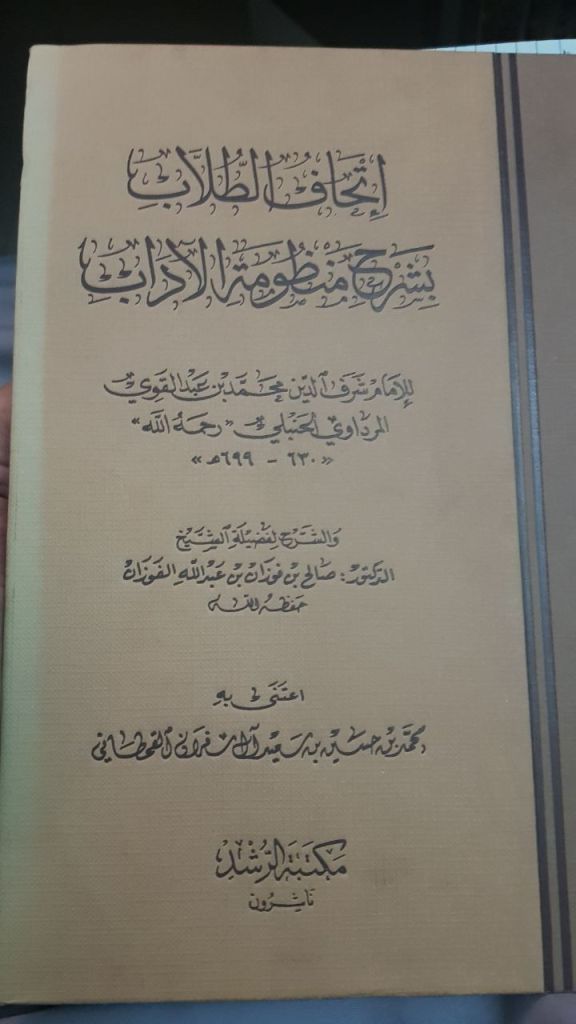
This is a superb explanation filled with evidences from the Quran, Sunnah, statements of the Salaf, and benefits from past scholars. The only issue with the printed version is that the couplets of the poem are not numbered nor does it have diacritical markers (taskheel). This is something in which you need to do yourself. A solution is recite the poem to a Shaykh who can correct you. If not possible, simply listen to the audio explanation of this poem by either Sh. Salih al-Fawzān (click here) or by Sh. Abdur-Razzāq al-Badr (click here) and fill in the markers as the reciter is reading and corrected. Both scholars provide possible markers of selected words and their subsequent meanings. You can also buy the book version of the poem by itself:

However you will still need to follow the steps mentioned above as there are some discrepancies in the markers.
I highly suggest reading the book form of Sh. Salih’s Fawzān’s explanation first, obtain a good understanding, then listen to Sh. Abdur-Razzāq’s audio explanation and record any additional benefit in the margins. Interesting to note: during Sh. Abdur-Razzāq’s lessons of this poem, a generous donor offered 1,000 SAR to 50 students who memorized the entire 1,000 lines. Allah knows best if that offer still stands.
Ibn Muflih’s al-Ādāb as-Shar’iyyah
The second text I would like to highlight is entitled: الآدَاب الشَّرْعِيَّة وَالمِنَح المَرْعِيَّىة by the great scholar Abu Abdullah Shams ad-Dīn Muhammad b. Muflih b. Muhammad al-Maqdisi al-Sālihī (763h).
Ibn Muflih was one of Ibn Taymiyyah’s prized students. Shaykhul Islām once said to him: “You are not Ibn Muflih (son of someone successful), rather you are successful!” If someone wanted to know the Fiqh views of Ibn Taymiyyah, they would read Ibn Muflih’s “al-Furoo'” as he was extremely knowledgeable of Shaykhul Islam’s selections. Even the great Ibn al-Qayyim would return to him often.
As for “al-Ādāb ash-Shar’iyyah”, it was authored three times in: extensive, medium-sized, and concise forms. The extensive version is pictured below:
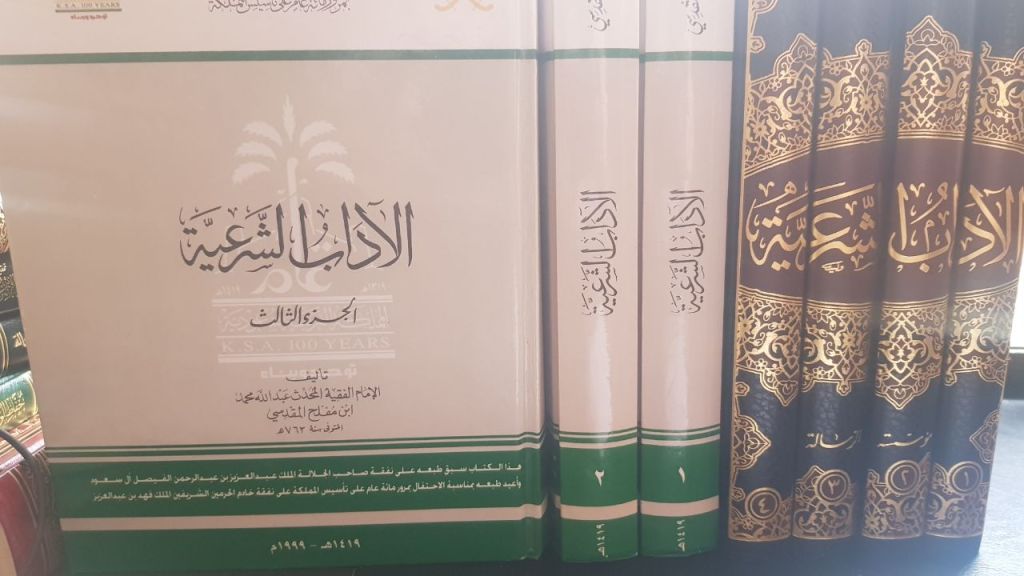
This edition was checked and edited by a group of scholars and researchers. At the helm were: Shu’ayb al-Arna’ut and Umar al-Qayyām. There is also another edition by Muhammad Rasheed Ridaa.
“al-Ādāb ash-Shar’iyyah” is another masterpiece in the field of Islamic Ādāb as it contains the foundations of Islamic manners extracted from the Quran and Sunnah and its Fiqh derived by the scholars of the Deen. This work is comprehensive and presents each point in fairly concise chapters. It incorporates wonderful topics and discussions underlining the many deficiencies a Muslim may have in their character with its solutions. “al-Ādāb ash-Shar’iyyah” also highlights the virtues of numerous attributes and actions that truly reinvigorates the reader into becoming a better Muslim. In this book, not only will you find quotes from the Quran and Sunnah, but also from Ibn al-Jawzi, Ibn Taymiyyah, Ibn al-Qayyim, Ibn Kathir, Ibn Rajab, and even from books that have not reached us yet like Ibn Aqeel’s “al-Funūn”, Ibn Hamdān’s “ar-Ri’āyah” and much more. It is important to note that there are few places where there is mention of mannerisms not derived from the Quran and Sunnah but instead found within the customs of the people of during his time or of those he quoted. This provides you with better insight of their culture. It is not affirmed nor rejected in the Texts so it is treated as a Mubāh affair.
Ibn Muflih said about this work: “This work comprises of several beneficial remarkable virtuous content from various sources. Whoever familiarizes themself with it will recognize its status. They will know that they have learned truly needed benefits that which most of the Fuqaha, or many of them, are not aware of due to their preoccupation with other than it.”
There are many other Hanbali works on Islamic Manners and Etiquette, but I hope this will suffice for now. May Allah have mercy on all of the great scholars mentioned above and grant us all the highest abode in Paradise without reckoning nor punishment. May Allah accept this effort, place Barakah therein, and fill our time with beneficial knowledge. Āmeen.
#K2FiqhBenefits #K2FiqhNotes #K2Fiqh #KeysToFiqh
✍️ Abu Awzaa’ee Abdus-Salaam al-Makki al-Hanbali
🕋 Makkah al-Mukarramah حرسها الله
🗓 20th of Muharram, 1441 (9/8/20CE)
👋 Join us for more benefits: T.me/K2Fiqh
Categories: #FiqhNotes, Benefits
 Keys To Fiqh